

Natsagdorj Dashdorj: The Founder of Modern Mongolian Literature and the World Hidden in His Manuscripts
Art & Culture

-On the 120th Anniversary of
Natsagdorj Dashdorj’s Birth-
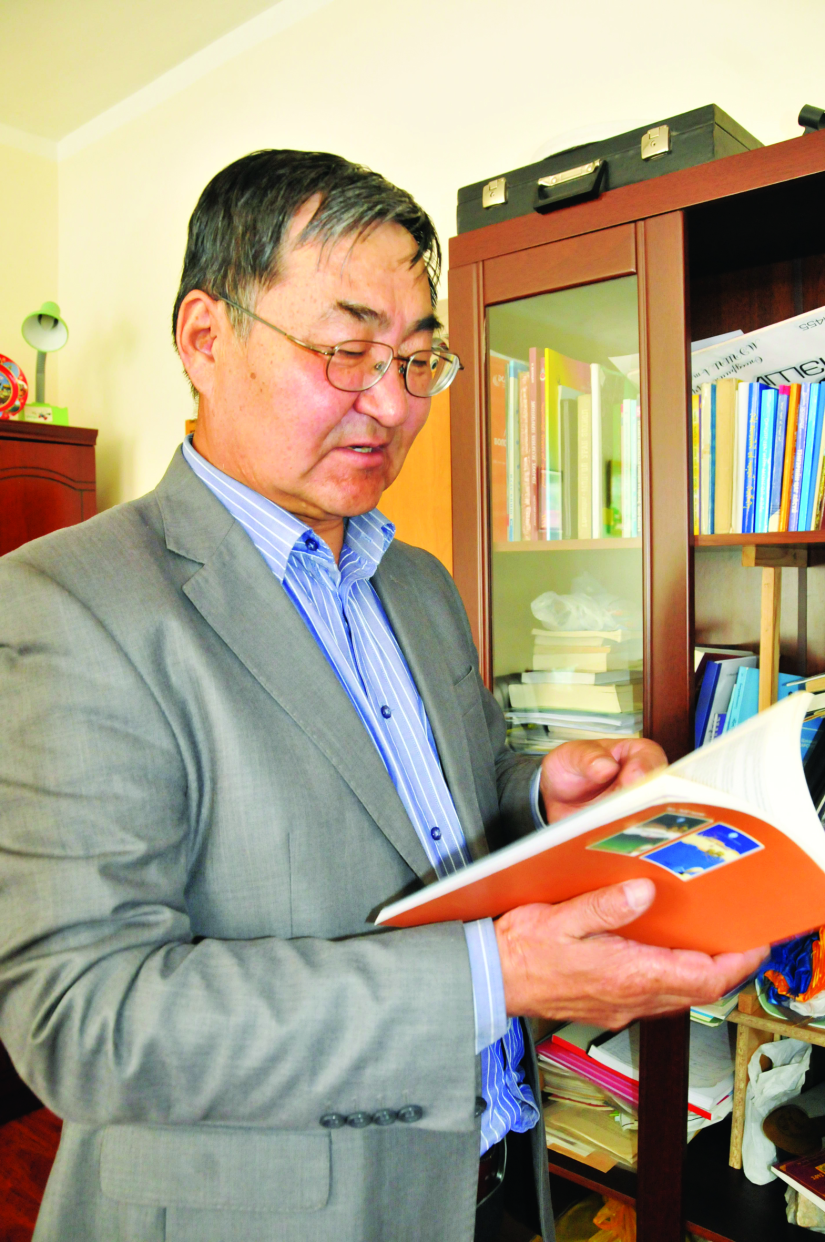
Ulaanbaatar, April 6, 2026 /MONTSAME/. The legendary writer Natsagdorj Dashdorj, who laid the foundations of modern Mongolian literature, lived a sadly short life. Still, his legacy and vivid imagery continue to shape the national consciousness today. To commemorate the 120th anniversary of his birth, we spoke with State Honored Teacher, Doctor, and Professor Jachin Choijilsuren to shed light on the "true image" of Natsagdorj and the fascinating details "hidden" within his original manuscripts.
-Writer Natsagdorj, who
enlightened generations of Mongolians with his beautiful and inspiring works,
is often called the pioneer of modern Mongolian literature. However, lately,
I’ve seen him described as "one of the founders." Is he the founder
or just one of them? And why?
The idea of Natsagdorj as the founder of modern Mongolian literature has been discussed since roughly the 1960s. In 1945, a small collection of 14 of his works was published.
In it, Academician Damdinsuren Tsend wrote, "Natsagdorj is a Mongolian classical writer." This was a well-founded and profound conclusion.
Damdinsuren noted that
Natsagdorj created works that would remain essential not just for our
generation, but for those to come. Indeed, his legacy has expanded so much that
today’s readers have access to over 100 of his works. By his 60th anniversary
in 1966, the Mongolian Writers' Union and our leading intellectuals paid even
closer attention, releasing a more comprehensive collection. Based on this, he
was solidified as the founder of modern Mongolian literature.
The reason for this
conclusion is twofold:
-He successfully created works across every literary genre, all of which resonated deeply with readers.
-He played a singular role
in the formation of the modern Mongolian literary language. The style of
writing, word choice, and sentence structure used in literature today all found
their expression in Natsagdorj’s work.
While some people, whether intentionally or accidentally, refer to him as "one of the founders," if you look at who is actually being read today from that 1930s era, it is undeniably Natsagdorj.
You can step out onto the street and hear people
reciting, "High stately mountains Khentei, Khangai, and Soyon..." Therefore, there is every reason to call him the founder of
modern Mongolian literature. This, of course, is not meant to diminish the
value of other writers.
Natsagdorj Dashdorj: Born Under a Writing Star
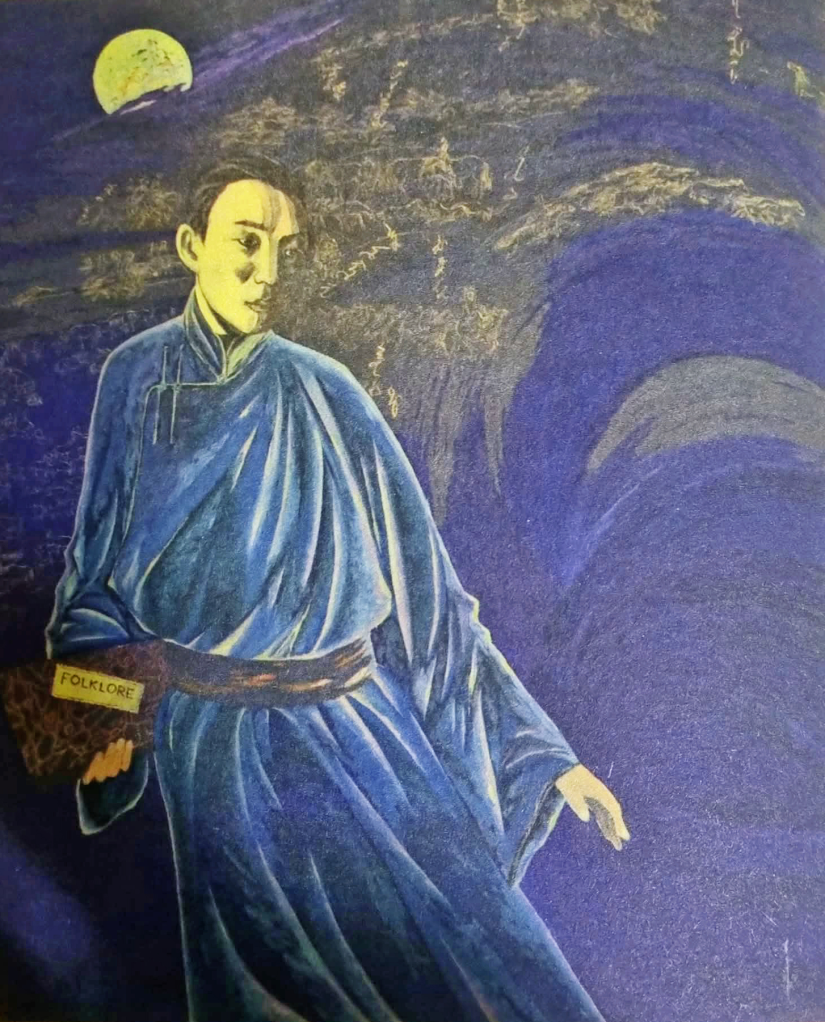 -Natsagdorj wrote in every
literary genre. It is often said his creative peak was between 1930 and 1936.
How common is it for a writer to be so versatile?
-Natsagdorj wrote in every
literary genre. It is often said his creative peak was between 1930 and 1936.
How common is it for a writer to be so versatile?
It’s as if Natsagdorj was
born under a "writing star." He acquired his writing habits and
experience through homeschooling. He likely read everything a literate
Mongolian of that time was expected to read, from "The Tale of the Tsaasan
Shuvuu" and "Oyun Tulkhuur” [Key to Wisdom] to "Todorkhoi Toli”.
He was incredibly
well-read. There are also records suggesting he attended a secondary school
established in Khuree during the Autonomous period. While his name doesn’t
appear on official student lists, it’s likely his father, Dashdorj, found a way
for him to attend voluntarily. He devoted himself to education from a very
early age.
When examining his
manuscripts, I see many notes written in Chinese and some in Russian. The
secondary school curriculum at the time included these languages. Later, of
course, he studied Russian and German abroad. Remarkably, he mastered German in
just 3-4 years to a level indistinguishable from a native speaker. A German
person once told me, looking at his writing, "This was written exactly
like a German." He was exceptionally talented, persistent, and an untiring
worker.
-He lived only 31 years. It
is a staggering age when you consider how he managed to write in every genre
and work so extensively across various sectors of social life. How did his
European education influence his work?
First, he had the knowledge
and the drive. Beyond that, the era demanded it. At the time, everyone, led by
Natsagdorj, realized that their way of life had become stagnant – he famously
used the metaphor of living "inside an overturned pot." Consequently,
the country sent students to Germany and France, including Natsagdorj and his
wife, Pagmadulam Damdin.
He made the most of that
time. He studied German, took classes in journalism, and became well-acquainted
with the theater. While he had a foundation in our native poetry and prose, he
also collected proverbs and even kept a notebook specifically studying shamanic
invocations. His foundation for prose came from the wonder of folktales, but he
realized that if folk tales were one thing, a "true" European-style
prose could be another. Regarding drama, while we had traditions like
"dialogue songs," he wrote “Uchirtai Gurvan Tolgoi” [Three Dramatic
Characters] using the European dramatic form.
His broad participation in social and political life was a combination of his education, his talent, and the needs of the times.
We can proudly say today that he was a creator and a
statesman who met those historical demands with honor.
The First in Asia to Translate Marco Polo
-He died so young. How are
his inner conflicts or loneliness reflected in his manuscripts? What did you
find most interesting?
A writer’s manuscript is
almost a doorway into their inner world. All the suffering, joy, and resentment
are left there. You can see notes from when he was hospitalized or when he sat
up through the night writing because he couldn’t sleep. Every critical moment
of his life is captured.
For instance, in 1934, he
made a grand plan and did extensive research for a work titled “Khelkheegui
Suvd” [Unstrung Pearls]. To this day, researchers haven't agreed on whether it
was intended to be a novella or a novel. There are also rumors that he wrote a
novel called Palace Secrets that has never been found.
Could he have written a
great novel? Absolutely. Why didn't he? Because in 1935–1936, he was
overwhelmed with research. Between 1932 and 1934, he was in charge of
translation at the Institute of Sciences. He was a top-tier translator of both
literature and history.
He seemed deeply committed to organizing and studying Mongolian history, starting from the Hunnu period through the era of Chinggis Khaan.
He wrote an article titled "Mongoliin
Tuukhiin Tovch” [Brief History of Mongolia] and translated several historical
works himself. In fact, Natsagdorj was likely the first person in Asia to
translate Marco Polo’s travels. He also supervised others' historical
translations – a massive undertaking. In 1935, he became head of the History
Department, and in 1936, head of the Philology Department. He worked on the
commission to create the first explanatory dictionary of the Mongolian
language. He did the work of several people combined. He may not have had the
time to finish a massive work like Unstrung Pearls.
-What is the basis for
believing Unstrung Pearls was meant to be a novel?
Looking at the materials,
it’s clear he intended it to be a great novel. His notes frequently mention the
form. He wrote, "Writing a novel is like building a beautiful house,"
and "There can be no man without a story, and no novel without a
philosophy."
He planned for the story to
center on the Bogd Khan’s palace, incorporating the corrupting influence of foreign
agents. He intended to depict the fates of 10 to 20 different characters – that
is clearly the scope of a novel. Because he was familiar with the great epic
novels of Europe, he set an incredibly high standard for himself. Had he wanted
to write something like some modern novels, he probably could have finished it
in a month. But because his standards were so high, he simply ran out of time.
-Let’s take prominent representatives of Mongolian
literature, Injinash B. and Ravjaa D., as examples. Injinash, for instance, was
born 100 years before Natsagdorj D., and Ravjaa was born 70 years before
Natsagdorj D. How was Natsagdorj different from his predecessors?
First of all, Natsagdorj created new characters. Before
him, Chinggis Khaan and saint lamas were common characters in the Mongolian
literary world. However, Natsagdorj created brand new characters, such as a
simple herder, an ordinary intellectual, or a regular student. Secondly, he
raised new questions. And thirdly, he weaved written and spoken languages into
a new literary language.
 -Most of us know Natsagdorj from his biographies in
textbooks. Based on your research, what kind of person was the “real
Natsagdorj”? Was there a “hidden” side of him, unknown to the public?
-Most of us know Natsagdorj from his biographies in
textbooks. Based on your research, what kind of person was the “real
Natsagdorj”? Was there a “hidden” side of him, unknown to the public?
Let me state the facts. There was a renowned historian
named Natsagdorj Shagdarjav. He was hired as an assistant in the history
department by Natsagdorj Dashdorj when the latter was head of the department.
After a year, he wrote a request to the Institute of Sciences stating, “Natsagdorj
Shagdarjav will become a valuable person for Mongolia in the future; therefore,
please increase his salary.” Natsagdorj Shagdarjav later said, “I did not know
he had written such a recommendation about me.” This shows what kind of person
he was – he did not go around telling others, “I’ve recommended
you” or “I’m getting your salary increased.”
Secondly, the main reason Natsagdorj Dashdorj was
repressed was his noble (taij) origin. From 1921 to 1990, Mongolians often
concealed their lineage. Whether one was born into nobility or not, everyone
claimed to be “a child of commoners.”
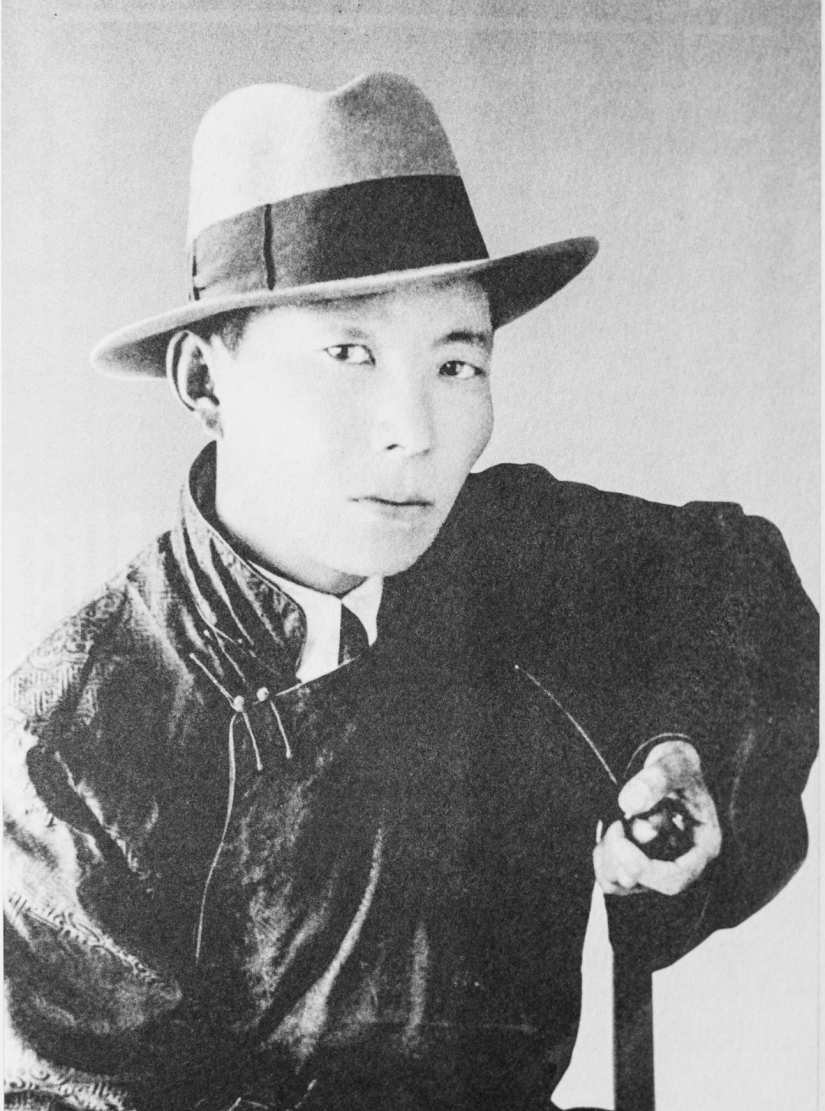
Photo caption: Said to have been taken in 1924 when he was a member
of the “Javkhlang Badruulagch” group, as recounted by Khas Ch. to Jachin Ch. in
1976.
Living as a noble’s child became nearly impossible after the 1930s. Yet he never hid his origin. In those harsh times, being a descendant of Chinggis Khaan likely cost him his life.
Thirdly, his manuscripts and portraits could easily have
been lost. In fact, because he was a good person, his students and
acquaintances preserved his writings and related materials and gradually handed
them over after 1948. One would hardly safeguard the legacy of someone who was
not respected.
Fourth, he was unjustly imprisoned twice. The first time,
in the spring of 1932, he was jailed for about six months and interrogated nine
times under accusations such as associating with German spies or celebrating
Manchukuo. Despite intense questioning such as “Whose spy are you? Which group
do you belong to?”, he never named a single Mongolian. At that time, naming
someone could lead to their arrest. This shows he was raised with true noble
character. Having lost his mother at the age of seven and being raised by his
father alone, he understood hardship and was compassionate. He once said his
father carried and raised him with great care.
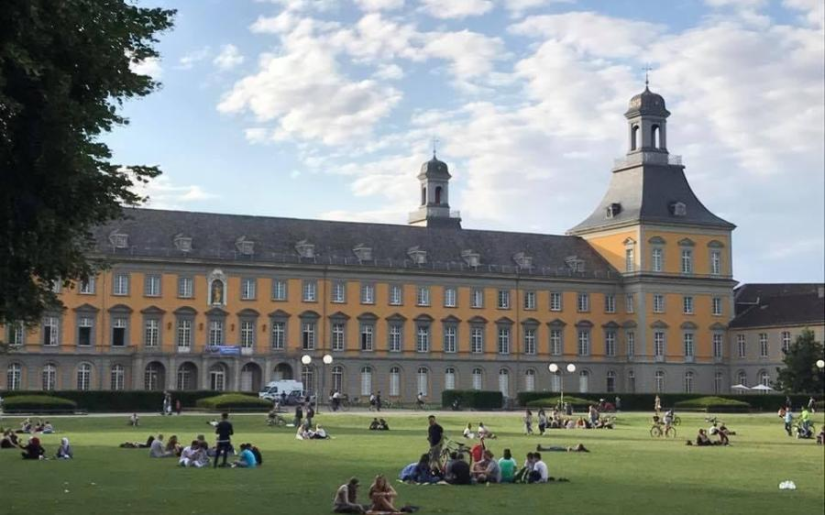
Natsagdorj Dashdorj was the first Mongolian to work at a
Mongolian Studies center in Germany.
-Mongolia is marking 100
years since it began training specialists in Europe. How were those first
students selected?
The 30 or so students sent to Europe in 1926 were all successful in secondary school. At that time, there was no distinction between the children of commoners and feudal lords. For instance, Navaan-Yunden himself was of noble origin.
Those without prior
schooling were not sent abroad, which also indicates that Natsagdorj Dashdorj
had already received a secondary education. He had consistently expressed his
desire to study. In 1925, he first went to what was then Soviet Russia to
attend a one-year military-political school. Later, he chose to go to Germany
because his aspiration was not to become a high-ranking military officer, but
to study history, culture, and scholarship. Among those students, he was
slightly older – around
20 – and
already had a family.
In Germany, he met and collaborated with a prominent Mongolian studies scholar, which also reflects his level and capability.
-Researchers say that
during the years Natsagdorj D. was in contact with Erich Haenisch, Haenisch’s
research progressed very successfully. In that case, what distinctive features
can be observed in Natsagdorj’s literary thinking and methods?
Looking at all of
Natsagdorj’s works, it is clear that he was fundamentally a poet. Even
“Uchirtai Gurvan Tolgoi” is entirely poetic in nature. He consistently
expressed ideas in a poetic or verse-like form, often conveying the inner
emotions of people. It can be said with certainty that he wrote under all
circumstances.
For example, while sitting
in a guanz cafe, he could observe three women entering and leaving and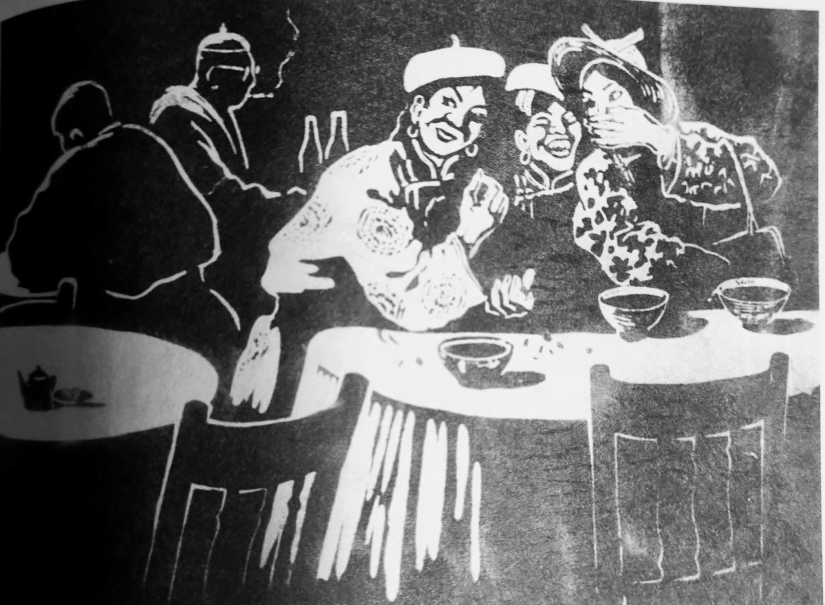 immediately wrote his work “Hee hee hee.” He wrote “Ikh Avgai” while in a
hospital, and the play “Ondoo Khumuujil” in prison in 1936. He would wake up at
night to write; for instance, he wrote “Shuvuun Saaral” on sleepless nights.
immediately wrote his work “Hee hee hee.” He wrote “Ikh Avgai” while in a
hospital, and the play “Ondoo Khumuujil” in prison in 1936. He would wake up at
night to write; for instance, he wrote “Shuvuun Saaral” on sleepless nights.
He was an extremely fast
writer. “Uchirtai Gurvan Tolgoi” was written at the insistence of Namdag Donrov.
It has even been said by earlier scholars that his health works influenced
Mongolia’s healthcare sector as much as dozens of doctors. In his poetry on
well-being, he embedded his true philosophy and views on human life.
Artist Aktiv G. “Hee hee hee.”
I believe that even after a
hundred years, people will still be reading “Jargalan, Jargalan, Jargalan…”
-It seems he was quite
close to Namdag, who studied in Germany with him.
In fact, they did not
become particularly close in Germany. It was during their imprisonment in 1932
that they became well acquainted. They collaborated on two works, “Uchirtai
Gurvan Tolgoi” and the play “Bi Bish.” Scholars generally consider “Bi Bish” to
have been written jointly by both Natsagdorj and Namdag, although Namdag himself
never claimed authorship of it while he was alive.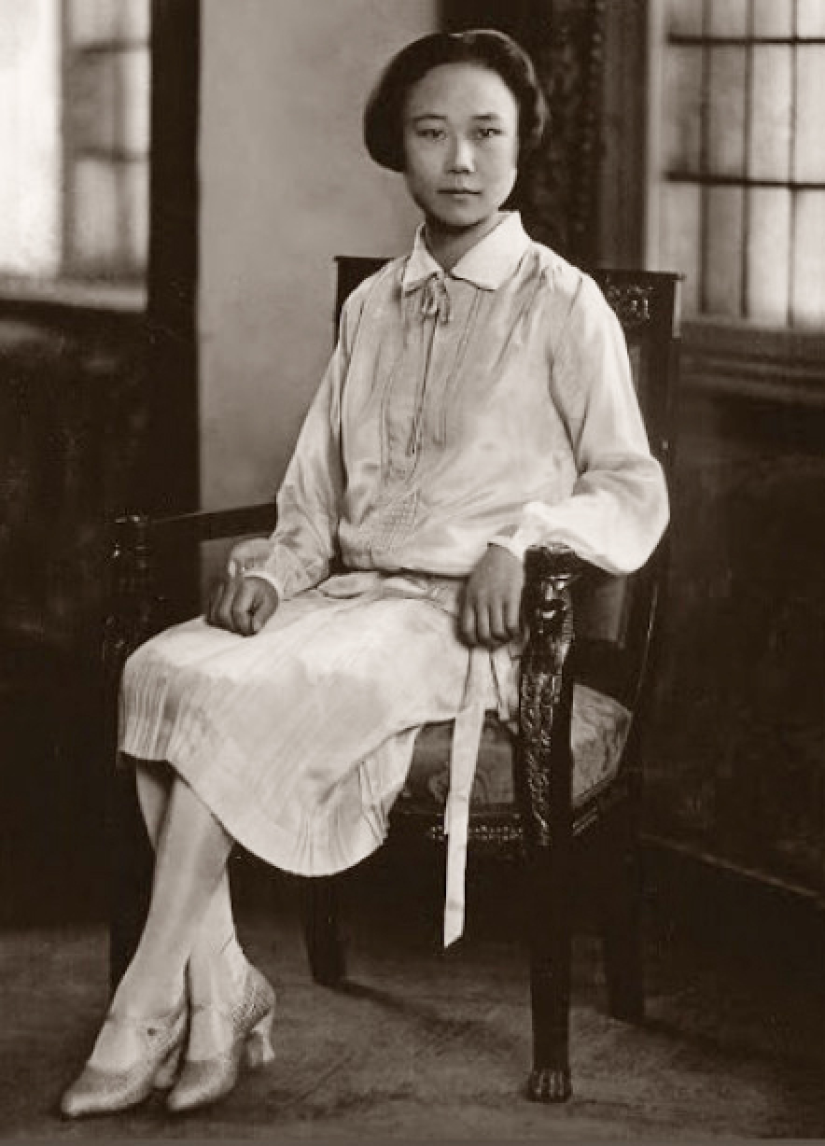
Later, when Namdag D. became a major literary figure, he may have been influenced by Natsagdorj. For example, in his novel “Tsag Toriin Uimeen” (Time and Power), the main character Oyundari was modeled after Natsagdorj’s wife, Pagmadulam. The reason is that Pagmadulam received a home-based education in Maimaa (present-day Amgalanbaatar). At that time, well-educated families in the capital ensured their children learned foreign languages such as Manchu, Chinese, and sometimes Russian, as well as music, literacy, and social etiquette. Pagmadulam was a refined and well-educated woman of that circle. Likewise, Oyundari in the novel is depicted playing music and being educated. Interestingly, before marrying Natsagdorj, Pagmadulam had been betrothed to someone else by decree of the Bogd – a detail that is also reflected in the character of Oyundari.
Also, in his work The Unstrung Pearl, there is a very beautiful young woman named Dariimaa. Her education and development are comparable to those of Pagmadulam. It is also recorded that Dariimaa was given to another man by order of the Bogd Khaan. So, it feels like writer Namdag Donrov, by writing “Tsag Turiin Uimeen” (Time and Power), completed what Natsagdorj had not managed to finish.
 -What criteria did the great writer
use when selecting works to translate?
-What criteria did the great writer
use when selecting works to translate?
He selected them carefully. He may
have truly admired Alexander Pushkin. Looking at how he translated Pushkin’s
works, such as “The Prisoner,” “The Raven Flies Toward the Raven,” and
“Anchar,” you can say that they were translated very skillfully.
From the 1930s onward, Natsagdorj
seemed to deeply feel that he was living in a difficult time. That is why in
his poem “Od” (Star), he asks whether there is confusion and chaos like in our
world over there or not. Works like “The Prisoner” carry a similar meaning. He
also knew that Anton Chekhov was a great writer.
-Why did that New Year celebration end
up being misinterpreted?
The celebration was held at the house
of Sodnom, who was then the Minister of Industry. Judging from the photograph,
it was a large house with a fairly long table. They had experienced New Year
celebrations when they were in Europe. However, those who had been to France
were not there; rather, people who had studied in Russia and Germany were
present, along with Russians, including Nina Chistyakova (the mother of
Natsagdorj’s daughter). They used to gather occasionally before as well.
Then, as 1931 ended and 1932 began,
they celebrated the New Year. There was likely no particular plan and purpose
behind it at all. Those present were mostly intellectuals, not politicians or
military leaders. Even the photographer was a former classmate.
At that time, there was a rule that one copy of any photograph had to be submitted to the Ministry of Internal Affairs. The problem was the caption written on it: “Banquet of Taiji Natsagdorj.” That wording caused suspicion.
Even when officials requested that he
be removed from Sodnom’s house, they commanded: “Remove the German Natsagdorj.”
The house actually belonged to the state. Sodnom died during the uprising of
1932. Natsagdorj was close friends with someone in Sodnom’s family, who
appreciated his literary work.
-Almost every Mongolian knows the poem
“Minii Nutag” (My Native Land). Despite being criticized during those
turbulent times, what contributed to the popularity of Natsagdorj’s works?
Damdinsuren Tsend once said, “The
two works that made Natsagdorj who he is, and turned Mongolian literature into
true literature, are 'Minii Nutag' and 'Uchirtai Gurvan Tolgoi'. These
two works became extremely famous.
Perhaps they even contributed to the
reasons he was repressed. “Uchirtai Gurvan Tolgoi” began being performed in theaters
from 1934 onward. In the 1930s and 1940s, people traveling by mail trucks would
sing their songs, taking roles like Nansalmaa, Yunden, or Balgan.
Previously, stage performances were more artificial, but now audiences saw ordinary people like themselves, young lovers like Yunden and Nansalmaa. This was very new and special at the time.
People traveling from places like Khovd or Sukhbaatar would sing “Uchirtai Gurvan Tolgoi” all the way to the capital. It was such a famous play. Some watched it 20–30 times. It was truly something new.
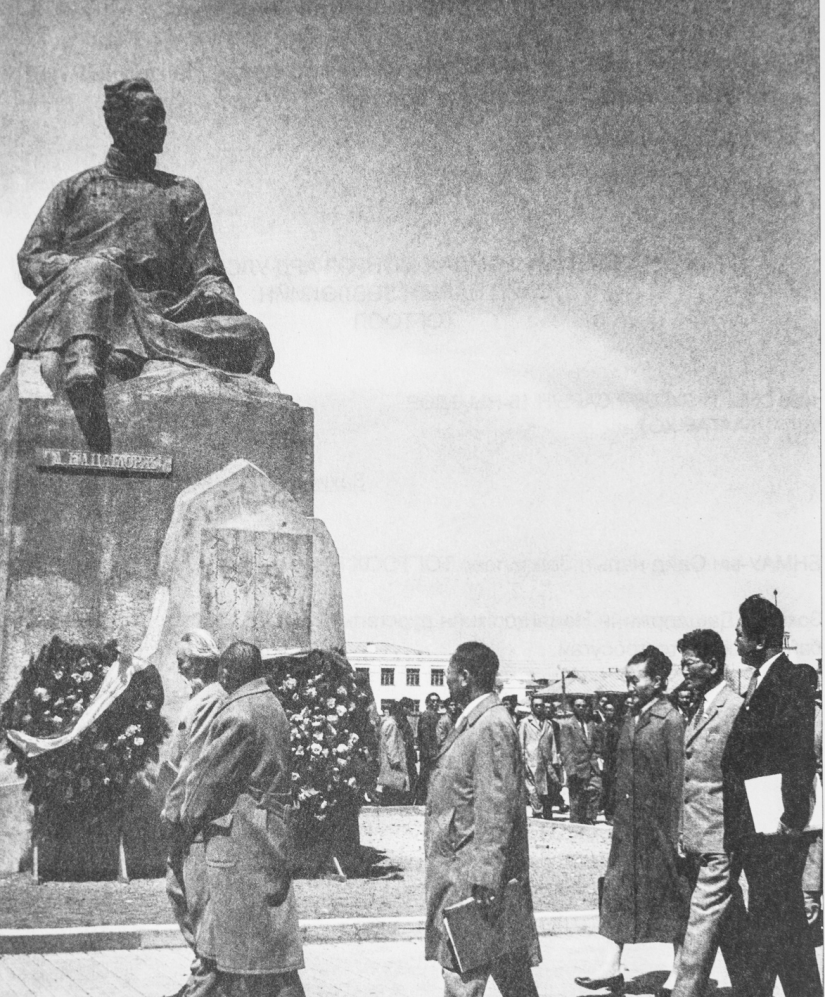
At the 70th anniversary of Natsagdorj Dashdorj’s birth.
From left: Rinchen B., Akhtaan B., Damdinsuren Ts., Udval S., Dashdendev S., Chimid Ch.
The poem “Minii Nutag” was
often recited on the radio, even performed with a Morin Khuur. As Natsagdorj
became famous like a “star” today, many people grew jealous of him.
After being imprisoned once, he
feared going back again. So, he sometimes pretended to be a careless drunk in
public, while privately continuing his serious work, writing history,
translating, and compiling dictionaries.
However, in the 2024 film
“Pagmadulam,” he was portrayed as a hopeless drunk, which I personally strongly
disagree with.
Notes of The Unstrung Pearl Will be Presented to Readers
-What information or records exist
about his death?
There are at least two reliable
pieces of information. One is a man named Khukhdei, who worked at the Central
Committee of the Union, who wrote an obituary saying, “Our talented poet has
passed away.” But neither the government nor literary organizations issued an
official statement.
In a 1945 collection, writer
Damdinsuren wrote, “One of our talented writers lost his life while drunk.” I
believe this was not just a simple statement. It hinted that Natsagdorj did not
die naturally, but due to external causes.
Natsagdorj died as a result of the
influence of people who labeled him a feudal, envied and resented him, and
subjected him to slander and false accusations. After spending six months in
prison, especially in underground cells, his health deteriorated badly. He
repeatedly requested medical treatment. If he had been allowed to go to Russia
for treatment in 1937, he might have lived longer – or perhaps he would have been among
the first victims of the later purges.
-Is there still a possibility that
previously undiscovered works of Natsagdorj may be found today, or have all of
his works already been fully studied?
Yes, it is possible. Scholar Sodnom
B. once said that there were two notebooks of Natsagdorj’s works, and one is
missing. There was even mention of a novel called “Ordnii Nuuts” [Palace Secrets]. So perhaps a
part of the work may still exist that we have not seen to this day. The works
we know today, like “Kharankhui Khad” [The Dark Cliff], “Lambugain
Nulims” (The Tears of a Venerable Lama), and “Soyoliig Gaikhav” [Amazed by
Culture] – all come from just one notebook,
which contains about 45–46 works and is preserved at the Institute of Language
and Literature.
If the other notebook was truly lost, we may still be missing 40–50 of his works. As for me, one of the works by Natsagdorj that has reached readers is the play “Ondoo Khumuujil” [Different Upbringing].
It was written on small pieces of
paper, scattered here and there. It took 5–6 years to figure out which part was
the beginning, which was the end, and what should come next, before it was
finally reconstructed as the work we now know. This kind of work is very
meaningful for researchers.
Similarly, we plan to publish the
notes of The Unstrung Pear in full detail for the 120th
anniversary of the great writer’s birth, so readers can understand its true
scope.
-How is Natsagdorj’s influence
reflected in later writers, and in which authors can it be seen?
Many writers have written under the influence of Natsagdorj. There is Erdene Senge, for example. In poetry, there is poet Yavuukhulan Begz, a very clear influence. It can even be seen in Lodoidamba Chadraabal. Writers like Lkhagva Jagdal also created beautiful imagery that can be compared to Natsagdorj’s. He set a standard and showed a model for others to follow.
-In many countries, great writers are
featured on their banknotes. I have seen that young researchers have even
proposed portraying Natsagdorj Dashdorj on Mongolia’s currency. What do you
think about this? Do you see it as important, or not?
I think it’s important. For his 120th
birth anniversary, it would be great to do something meaningful. If not
banknotes, it would be nice to issue a commemorative stamp for the occasion.
When people think about culture,
literature, or even nature, they often turn to what Natsagdorj once wrote. He
remains a central figure in Mongolia’s intellectual and spiritual world.