

Ministry of Education Unveils Plan to Bridge Knowledge Gaps
Society
Ulaanbaatar,
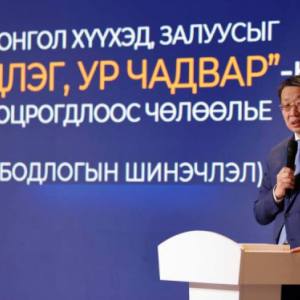
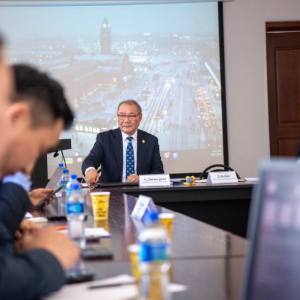
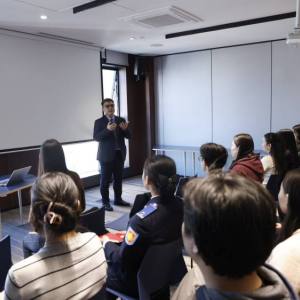
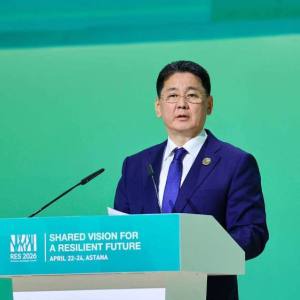
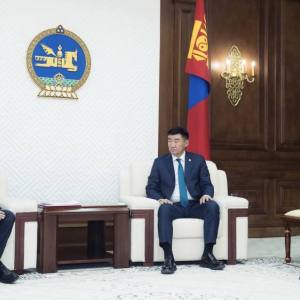
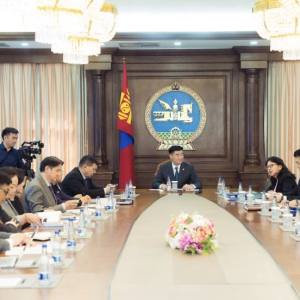
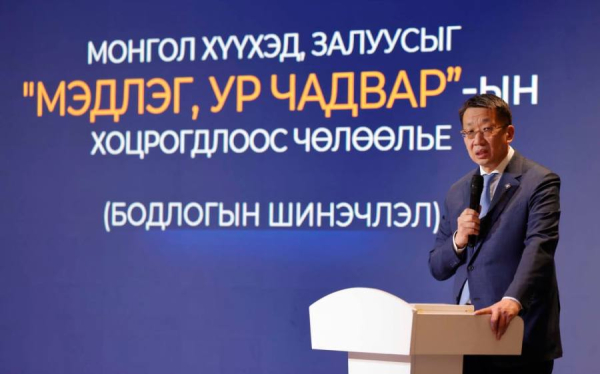
April 28, 2026 /MONTSAME/. Minister of Education Enkh-Amgalan Luvsantseren presented
his policy roadmap for the education reform on April 27.
Prime Minister
Uchral Nyam-Osor proposed the “Chuluulye” (Liberate) initiative, four freedom paths,
and four liberation policies. In connection with this, the government approved
the Ministry of Education's “Let’s Liberate Mongolian Youth from Education
Lags” comprehensive plan on April 22. Within this framework, Minister of Education
Enkh-Amgalan Luvsantseren has planned to implement seven main reforms.
Specifically:
-Education reform:
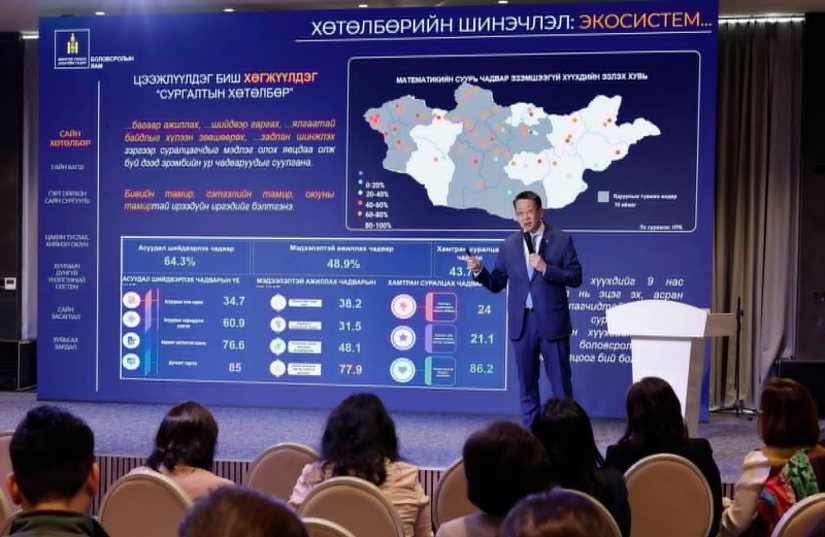
Ecosystem
-Liberating
Teachers from Workload
-The Best
School Is the One Closest to Home
-Liberation
through Digitalization
-Uninflated Grading
System
-Good Governance
-Performance-
and result-based financing
 As part of the
“Liberating Teachers from Workload” component, the program includes measures
such as requiring teachers who studied with state funding but do not work in
their profession to reimburse those costs, and allowing young people who work
in understaffed schools to have their service counted as equivalent to military
service.
As part of the
“Liberating Teachers from Workload” component, the program includes measures
such as requiring teachers who studied with state funding but do not work in
their profession to reimburse those costs, and allowing young people who work
in understaffed schools to have their service counted as equivalent to military
service.
The minister
noted, “In 2023, Parliament passed a comprehensive package of education
laws. With this, we introduced the national concept that ‘the best school is
the one closest to home.’ Differences in education quality between public and
private schools, urban and rural schools, and central and suburban schools have
been acknowledged across the sector. This law includes six major reforms to
eliminate these disparities.
First,
curriculum reform: Had we followed the planned timeline, 9th grade could
have transitioned to the Cambridge system by now. Instead, we are only
beginning with 1st grade this year, meaning we have lost three years.
Second, a
strong teacher system: We will restore a system where the best candidates
become teachers.
Third, a
per-student funding model: Each child should carry funding. This system
will help eliminate disparities between public and private schools, as well as
between urban and rural areas. Funding levels will differ by grade (1–12).
Fourth, an
assessment system: We will eliminate falsified grading and introduce
evaluation systems for teachers, schools, and students.
Fifth, school management reform: We will establish a system where the most capable individuals become school and kindergarten principals.”
By September 1, 2026, more than 700 principals of public schools will undergo certification. Alongside recent salary increases, teachers will be expected to demonstrate higher skills and productivity.
He emphasized
that certification will begin with cases such as Mongolian language teachers in
Bayan-Ulgii who cannot speak Mongolian, English teachers who cannot speak
English, and mathematics teachers who struggle to understand upper-level
content, stating that improving education quality must start from this point.
Mongolia has
also participated in the international PISA assessment for the first time.
Results showed that 15-year-old students lag behind their peers by 2–3 years in
science and mathematics. The minister noted that although a special program
should have been implemented following the 2022 PISA results, progress had
stalled. He also highlighted that students in soum (rural district) schools lag
behind those in the capital by 2.5 years in mathematics, and that one in two
students struggles with reading comprehension.
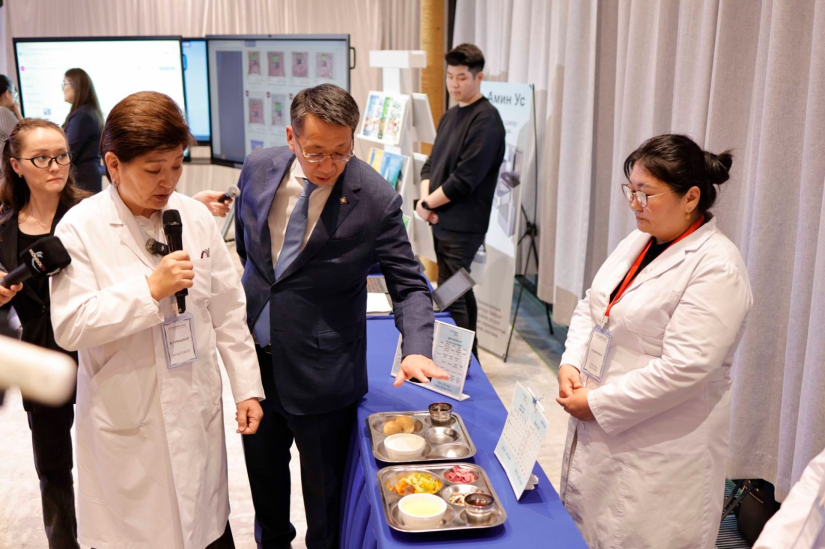 Continuing, he
stated that under the “closest school is the best school” policy, curriculum
reform will focus on improving lessons, textbooks, teacher skills, and the
school environment. The goal is to develop three core capacities in Mongolian
children: intellectual, emotional, and physical. He added that the current
system relies too heavily on memorization and exam preparation, and that
reforms will shift toward preparing students for real life. Currently, only 3%
of students are trained for academic competitions, while 97% experience
learning gaps.
Continuing, he
stated that under the “closest school is the best school” policy, curriculum
reform will focus on improving lessons, textbooks, teacher skills, and the
school environment. The goal is to develop three core capacities in Mongolian
children: intellectual, emotional, and physical. He added that the current
system relies too heavily on memorization and exam preparation, and that
reforms will shift toward preparing students for real life. Currently, only 3%
of students are trained for academic competitions, while 97% experience
learning gaps.
The
presentation also outlined measures to address the teacher shortage. For
example, steps will be taken to return teachers whose education was funded by
the state back into the profession; otherwise, they will be required to repay
the costs. Over the past five years, private schools have attracted many top public-school
teachers through higher salaries under various partnership programs. The ministry
plans to bring back those who left in the past three years, or require
compensation from private institutions if they are not returned.
Additionally, final-year university students will be placed directly into jobs before graduation, and a program to train teachers within 100 days will be implemented. Furthermore, individuals who have not repaid loans from the Education Loan Fund will be required to work as teachers in rural areas, with their loans offset through service. These teacher development measures will be implemented nationwide in phases.