

Market Entering Short-term Stable Growth
Economy

Ulaanbaatar,
April 28, 2026 /MONTSAME/. MONTSAME National News Agency, in cooperation
with “MICC Securities” LLC (MICC Mongolia International Capital Corporation),
is providing readers with a weekly overview of Mongolia’s domestic capital
market and economic developments.
Weekly Capital Market and Economic Overview
(2026.04.20–2026.04.26)
MONGOLIAN
STOCK EXCHANGE
During the
week, a total of 13.25 million securities worth MNT 6.37 billion were traded on
the Mongolian Stock Exchange. Khan Bank JSC, Golomt Bank JSC, Ard Credit NBFI
JSC, XacBank, and APU JSC led trading by value.
During this
period, two block trades were executed, specifically:
- 610,000 shares of Golomt Bank JSC (GLMT) at MNT 1,240 per share, totaling MNT 756.4 million;
- 6.67 million shares of Ard Credit NBFI JSC (ADB) at MNT 122 per share, totaling MNT 812.93 million.

Last week, the
Mongolian Stock Exchange indices closed higher, maintaining a positive market
sentiment. The TOP-20 Index rose by 1.41%, the MSE A Index by 1.53%, and the
MSE B Index by 0.16%.
This growth
continued the recovery trend observed in the previous week, indicating
sustained buying activity in the market. In particular, the increase in the MSE
A Index reflects relatively strong performance among large- and mid-cap stocks.
Meanwhile, the modest rise in the MSE B Index suggests continued stability and
limited movement in the small-cap segment.
Overall, the
market appears to be entering a short-term phase of stable growth, with
previous seasonal and technical factors (such as ex-dividend effects and
seasonal volatility) gradually subsiding.

FUEL PRICES,
GEOPOLITICS, AND THE CAPITAL MARKET: EXTERNAL PRESSURES ON MONGOLIA’S ECONOMY
At the regular
Cabinet meeting held on April 22, 2026, Prime Minister N. Uchral presented an
update on the economic situation. Rising global oil prices—driven by
geopolitical tensions in the Middle East—are affecting the domestic fuel
market.
Specifically,
there are conditions for increases in domestic fuel prices:
- Regular diesel rising by MNT 2,200 to MNT 5,200;
- Euro-5 diesel to MNT 5,300;
- AI-95 gasoline to MNT 4,100.
The government
is monitoring the situation and has submitted a draft law to Parliament seeking
authority to set import customs duty rates. However, on April 23, the
government stated that fuel prices would not increase sharply.
Fuel risk:
Rising diesel and AI-95 prices may increase production costs in transport,
mining, and agriculture.
Legal
measures: The government submitted an urgent bill to gain flexibility in
setting customs duties.
MSE outlook:
After reaching historic highs earlier in 2026, benchmark indices may continue
to decline.
Inflation
pressure: Inflation is projected to remain around 7.0% in 2026 due to
rising fuel and energy prices.
Fluctuations in
global oil prices create additional inflationary pressure for a country that
relies entirely on fuel imports. While flexible customs tariff policies may
help contain short-term price spikes, they could place pressure on fiscal
revenues in the medium term.
For the
Mongolian Stock Exchange, rising costs in fuel, transport, and food sectors may
be reflected in second-quarter earnings reports, potentially deepening stock
price declines.
INDUSTRIAL
OUTPUT GREW BY 61% IN Q1 2026, DRIVEN BY MINING
According to
preliminary Q1 2026 data from the National Statistics Office, total industrial
output reached MNT 16.4 trillion, increasing by MNT 6.2 trillion, or 61.2%,
year-on-year. This marks significant growth compared to MNT 8.7 trillion in
2023, MNT 11.7 trillion in 2024, and MNT 10.2 trillion in 2025.
The main driver
of this growth was the mining and extractive sector. Output in this sector
reached MNT 13.6 trillion, growing by 74.2%. This was largely driven by:
- Metal ore extraction, which increased 2.3 times (MNT 4.8 trillion);
- Coal production, which rose by 28.0% (MNT 1.0 trillion).
Total sales
also reached MNT 18.8 trillion, up 75.3%, with metal ore extraction accounting
for 62.9% of exports.
Key
indicators:
- About 94% of total growth came from the mining sector, indicating continued risks to economic diversification.
- Copper concentrate (metal content) increased by 36.4% to 611 thousand tons.
- Coal output rose by 68.7% to 25.7 million tons, reinforcing its role as a key export commodity.
- Cement production increased by 96.7% to 171 thousand tons, reflecting rising demand in construction and infrastructure.
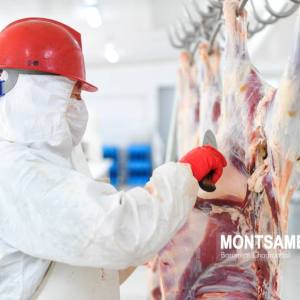
- The food and beverage sector weakened: beverages declined by 18.2% and meat production by 62.3%.
- The industrial production volume index reached 214.0 (2015=100) in March 2026, down 14.1% year-on-year.
While overall
output growth is strong, it is largely driven by mining. The decline in the
physical volume index suggests that nominal price effects are outweighing real
production growth. Investors should therefore carefully distinguish inflation
effects in market valuations.
EXPORT OF
PLANT-BASED PRODUCTS GROWS, BUT MARKET CONCENTRATION REMAINS HIGH
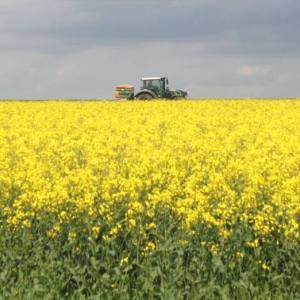
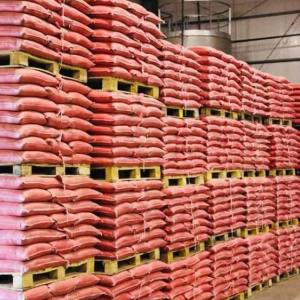
Over the past
year, Mongolia’s exports of plant-based products reached 183.5 thousand tons,
maintaining a steady upward trend. However, 86% of total exports were directed
to China, indicating continued high market concentration. In terms of export
structure, 75% consists of cultivated crops; 24% processed products; 1% timber
materials.
Key export
products include rapeseed, feed bran, and hay:
- Rapeseed: 100.8 thousand tons
- Bran: 27.9 thousand tons
- Hay: 23.7 thousand tons
- Potatoes: 10.8 thousand tons
Smaller volumes
of sea buckthorn, carrot juice, and pine nuts were also exported.
The growth in
exports has stimulated activity in the agricultural sector, supporting crop
diversification, improved soil fertility, and higher yields. However, the high
concentration in a single export market continues to pose risks.
Overall, while plant-based exports are supporting agricultural performance, further progress in market diversification and value-added production remains crucial.