

World Bank Projects 5% Economic Growth for Mongolia in 2026
Economy
Ulaanbaatar,
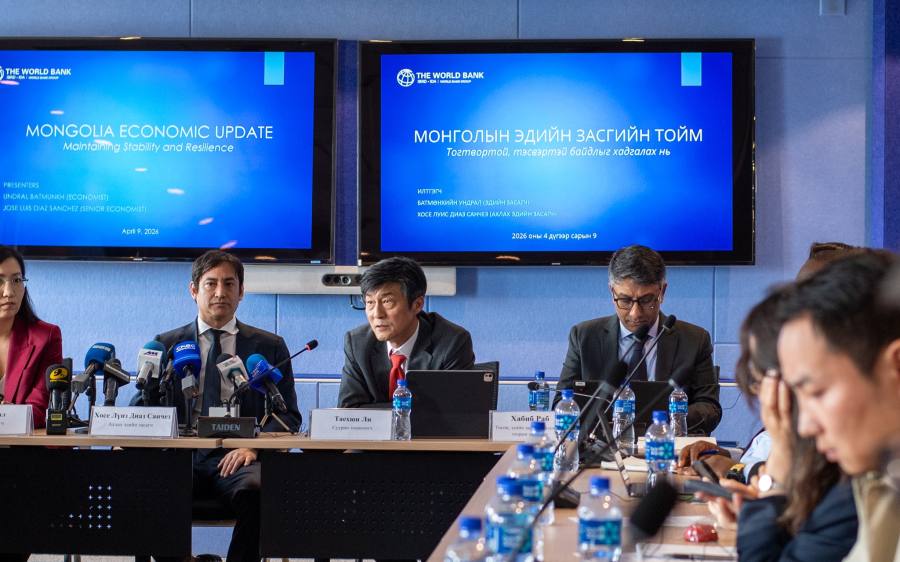
April 10, 2026 /MONTSAME/. While presenting the latest “Mongolia Economic
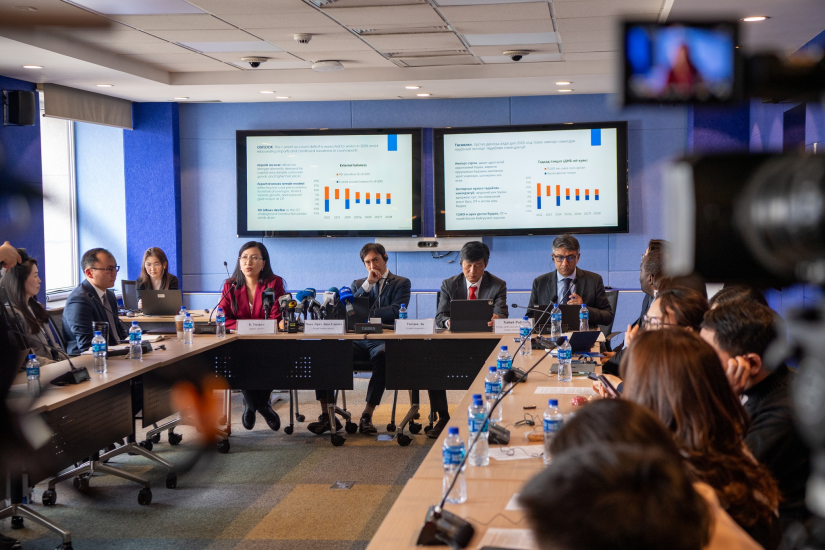
Update,” World Bank Country Manager for Mongolia, Taehyun Lee, noted that “Mongolia’s
economy stays resilient but faces rising uncertainty.”
 He further
explained, “Protecting macroeconomic stability and vulnerable households
from potential prolonged external shocks, while diversifying the economy and
boosting its competitiveness, remain key pressing priorities.”
He further
explained, “Protecting macroeconomic stability and vulnerable households
from potential prolonged external shocks, while diversifying the economy and
boosting its competitiveness, remain key pressing priorities.”
According to
the latest Mongolia Economic Update, Mongolia’s economy is projected to grow at
5.0% in 2026, as mining and agricultural output normalizes following a strong
2025 performance.
Despite trade
disruptions and elevated geopolitical tensions, Mongolia’s economy expanded by
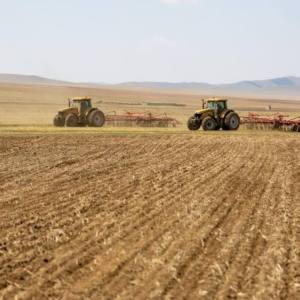
6.9 % in 2025. Growth was driven by a strong rebound in agriculture and
solid mining performance, particularly copper production at Oyu Tolgoi, a key
national mine. 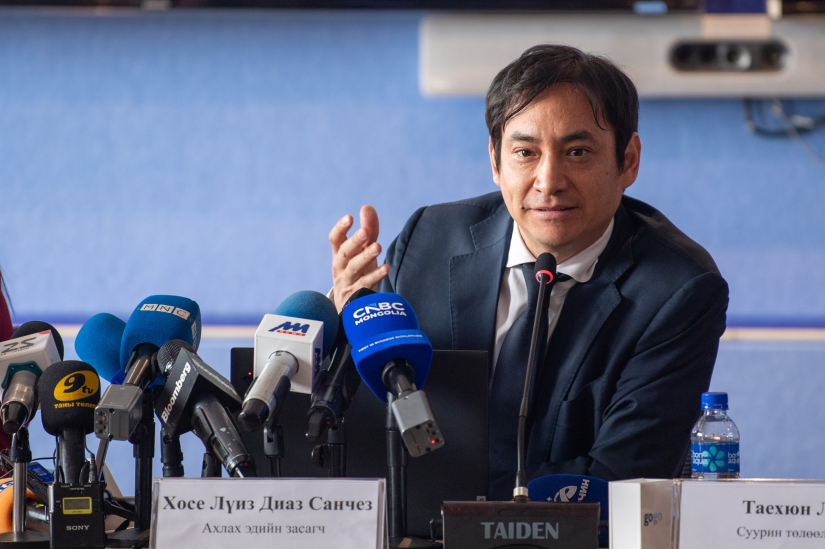 These growth drivers helped offset weaker coal activity. Other
sectors experienced mixed performance, with strong growth in construction and
manufacturing, while trade and services moderated.
These growth drivers helped offset weaker coal activity. Other
sectors experienced mixed performance, with strong growth in construction and
manufacturing, while trade and services moderated.
Senior Country
Economist for Mongolia, Jose Luis Diaz Sanchez, highlighted, “Strong export
earnings and resilient household incomes kept consumer spending high. Combined
with higher food and energy prices, these factors pushed inflation up from an
average of 6.8% in 2024 to 8.6% in 2025. Over the medium term, growth is
projected to average approximately 5.5% in 2027-2028, supported by large
infrastructure projects and sustained domestic demand.”
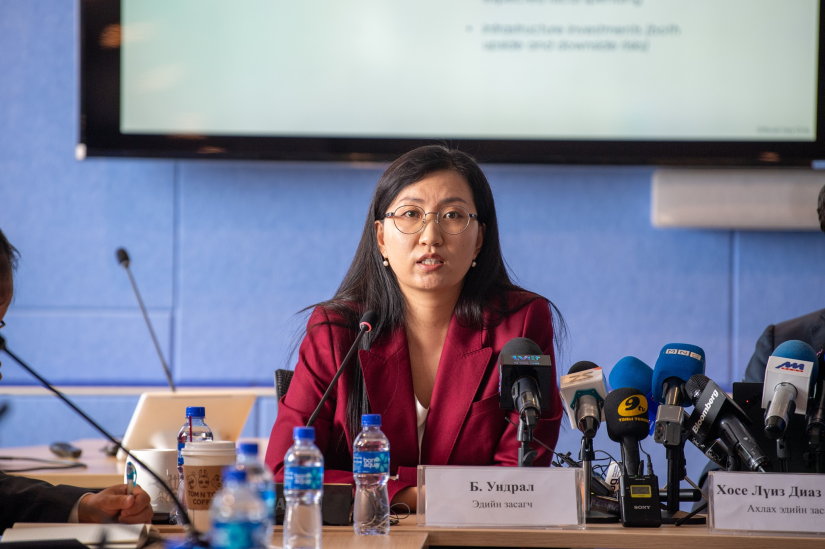 Country
Economist for Mongolia, Undral Batmunkh, elaborated, “Risks to the outlook
are tilted to the downside. Globally, trade uncertainty and a prolonged Middle
East conflict could weaken external demand, disrupt mineral exports, raise
production costs and consumer prices, and slow growth. Domestically,
stronger-than-expected fiscal spending could boost growth in the short-term but
may widen external imbalances and increase inflation.”
Country
Economist for Mongolia, Undral Batmunkh, elaborated, “Risks to the outlook
are tilted to the downside. Globally, trade uncertainty and a prolonged Middle
East conflict could weaken external demand, disrupt mineral exports, raise
production costs and consumer prices, and slow growth. Domestically,
stronger-than-expected fiscal spending could boost growth in the short-term but
may widen external imbalances and increase inflation.”
The report highlights the importance of strengthening economic resilience and supporting diversification. It calls for addressing persistent infrastructure gaps and advancing critical mineral development to enhance competitiveness, alongside efforts to strengthen disaster preparedness and climate resilience. In this context, the report’s special chapter examines how the clustering of firms and workers in Ulaanbaatar raises productivity and creates opportunities. It also shows, however, how growing urban congestion may limit these gains. This highlights the need to improve urban efficiency and promote more balanced spatial development across the country.