

Mining Sector Remains Backbone of Economy
Economy
Ulaanbaatar,
April 14, 2026 /MONTSAME/. The MONTSAME National News Agency, in
cooperation with MICC Mongolia International Capital Corporation LLC, has
launched a weekly review of Mongolia’s domestic capital market and economic
developments, to be published at the beginning of each week.
Weekly Capital Market and Economic Review
(2026.04.06–2026.04.12)
MONGOLIAN
STOCK EXCHANGE
During the
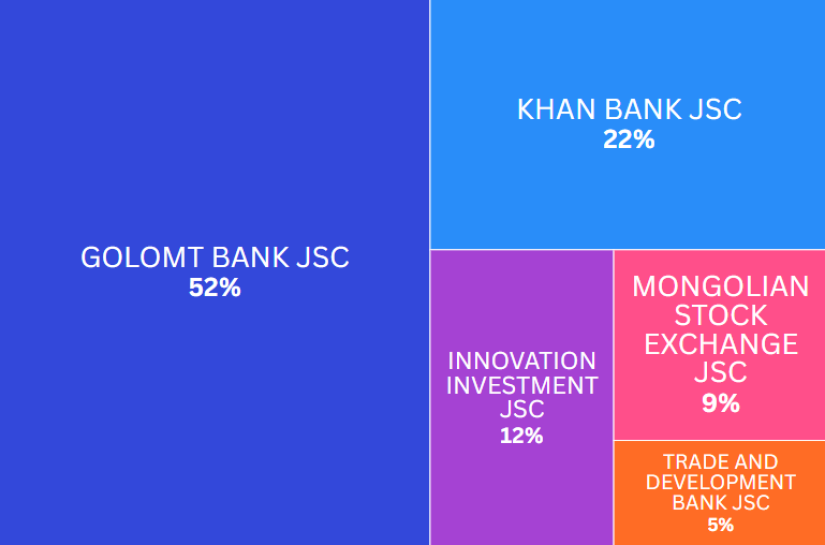
week, a total of 7.4 million securities worth MNT 6.4 billion were traded on
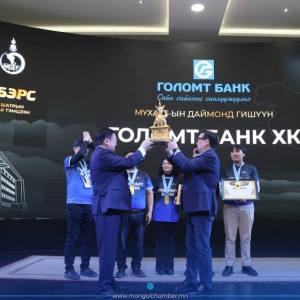
the Mongolian Stock Exchange. Among them, Golomt Bank JSC, Khan Bank JSC,
Innovation Investment JSC, Mongolian Stock Exchange JSC, and Trade and
Development Bank JSC led in trading value.
During this
period, a number of block trades were executed. In particular, 498,000 shares
of Golomt Bank JSC (GLMT) were traded at MNT 1,245 per share, totaling MNT 620
million.
As of last
week, the Mongolian Stock Exchange indices closed lower. The TOP-20 Index fell
by -1.27% to 50,119.16 points, the MSE A Index declined by -0.69% to 19,005.34
points, and the MSE B Index dropped by -2.26% to 14,159.61 points. The
relatively sharp decline in the MSE B Index reflects stronger selling pressure
on small and mid-cap, less liquid stocks. Meanwhile, the milder decline in the
MSE A Index indicates that large, actively traded companies remained relatively
stable. Market movements during the week were mainly influenced by seasonal and
technical factors, with no signs of deterioration in fundamental conditions.
During the
period, several companies entered ex-dividend status, leading to price
adjustments in line with dividend payouts. In addition, announcements of
shareholders’ meetings and the opening of shareholder registration also
influenced short-term investor positioning and trading activity.
Dividend-related price adjustments and shifts in short-term investor behavior
were the main drivers of the market’s negative weekly performance.

INFLATION
RE-ACCELERATES, REACHING 7.3%
In March 2026,
the Consumer Price Index (CPI) rose to 7.4%, up 1.2 percentage points from the
previous month. Higher fuel prices and increased food prices mainly drove this
rise.
Due to
geopolitical instability in the Middle East, the prices of fuels other than
AI-92 gasoline increased, putting pressure on transportation and logistics
costs. At the same time, rising meat and meat product prices suggest that
inflationary pressures may persist. Food prices nationwide increased by
13.9–15.2% compared to the same period last year, indicating that food
dominates the inflation structure. Specifically, meat and meat products
increased by 23% year-on-year, making the largest contribution to the CPI. This
is likely linked to seasonal supply conditions, higher transport costs, and
import-related effects.
In Ulaanbaatar,
inflation also re-accelerated in March, rising by 1.5% month-on-month and 7.3%
year-on-year. The main driver of inflation in the capital remained food prices,
which increased by 15.3% in March—the highest level since September 2023.
Experts warn that if fuel and meat price increases continue, inflation may
remain elevated in the coming months.
MONGOLIA’S
ECONOMIC GROWTH: STRONG EARLY-YEAR PERFORMANCE AND MEDIUM-TERM OUTLOOK
Mongolia’s
economy recorded strong growth in the first two months of 2026, supported by
mining sector activity and seasonal factors.
According to
preliminary data from the National Statistics Office, real GDP grew by 7.6%
year-on-year, driven mainly by a 32.3% increase in mining and extractive sector
value added and a 4.2% increase in the services sector. Overall, the economy
grew by 8.6% in January and 7.6% in February.
However,
according to the World Bank’s latest Mongolia economic outlook, the rapid
expansion seen in 2025 is expected to slow to around 5.0% in 2026. In the
previous year, strong copper production at Oyu Tolgoi and a sharp recovery in
the livestock sector following a harsh winter offset declining coal exports and
weak foreign investment, bringing growth to 6.9%. This year, as these
exceptional factors normalize, growth is expected to moderate.
Going forward,
domestic demand and government-led projects will continue to support activity,
but external risks such as geopolitical uncertainty, trade tensions, and
commodity price volatility may negatively affect growth. The World Bank also
noted that as major mining construction phases conclude, foreign direct
investment may slow, and private investment is likely to remain limited in the
near term.
Domestically,
expansionary fiscal policy may support growth in the short term but could
increase inflationary pressure and widen the current account deficit. This may
lead to continued tight monetary policy. Under these conditions, inflation is
expected to average around 8.5% in 2026.
TRADE
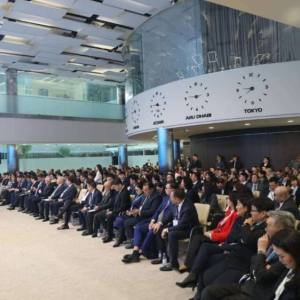
FINANCE FORUM HELD
Mongolia’s
financial sector is increasingly shifting focus from traditional loan growth
toward export and trade finance, supporting foreign-exchange-earning sectors
through lower-risk, flow-based financing.
In this
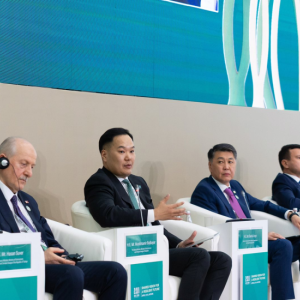
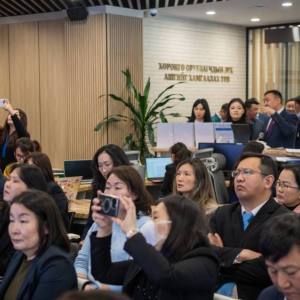
context, Trade and Development Bank organized the “Trade Finance Forum” last
week under the theme “Resource Economy,” discussing trends in natural
resources, energy, and international trade finance, as well as opportunities to
reduce costs. The forum focused on practical solutions to enhance clients’
competitiveness through banking products and services.
Globally,
driven by technological advancement, renewable energy, and AI-based economic
expansion, demand for strategic metals such as copper, lithium, and rare earth
elements is expected to increase by 30–40% by 2030. While this presents
opportunities for resource-rich countries, experts emphasized that finance,
trade, and policy coordination will be critical to turning these opportunities
into real economic gains.
For Mongolia, the mining sector remains the backbone of the economy, and there is a growing need for a more stable and efficient trade and financing system. As of 2025, Trade and Development Bank alone accounted for 32% of the banking sector’s mining-related financing, of which 60.7% was allocated to gold, 19.6% to coal, 12.3% to iron ore, and 7.4% to other minerals. This indicates gradual diversification in the financing structure. Overall, the growth of trade finance is seen as an early signal of a shift toward supporting non-mining exports through financial channels.