

Revised Forest Law to Expand Public Benefits
Economy
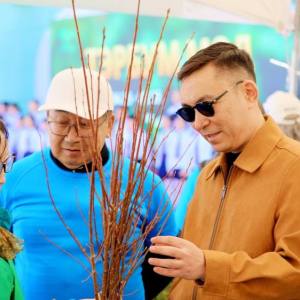
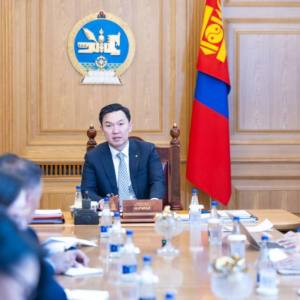
Ulaanbaatar, April 2, 2026 /MONTSAME/. A series of discussions on the draft revised Law on Forests, organized by the Parliament’s Standing Committee on Environment, Food and Agriculture, was held on April 1 at the State Palace.
The discussions are being conducted in stages by the
Standing Committee in cooperation with a working group established under
Resolution No. 523 of the Speaker of Parliament. This working group is tasked
with developing proposals and drafting relevant legislation on environmental
protection and green development.
The first discussion took place on March 30 and brought
together researchers, scientists, and professional organizations engaged in
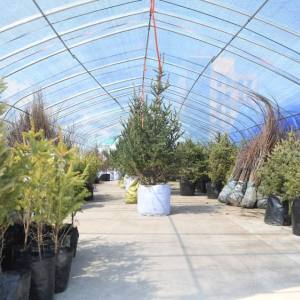
long-term forestry studies, as well as stakeholders involved in tree nurseries
and agroforestry. The discussion held on April 1 focused on involving
businesses and private sector representatives operating in the field, gathering
their views and feedback.
Member of Parliament and head of the working group, Bat-Erdene
Bat-Ulzii, highlighted that the draft revised law consists of 12 chapters and
59 articles. He emphasized that its key innovation lies in defining forests as
ecosystems and incorporating provisions aimed at increasing economic
circulation while improving the livelihoods of local communities.
During the discussion, Member of Parliament Undraa Agvaanluvsan
noted that integrating forests into the economy, alongside their protection and
restoration, is of strategic national importance. She stressed that government
policy should support residents of remote soums in aimags such as Khuvsgul and
Khentii to become stewards of their forests and sustain their livelihoods. At
the same time, she underlined the need for the draft law to promote the use of
advanced technologies, enhance public knowledge and capacity, and support
community groups and cooperatives.
The currently effective Law on Forests regulates relations
related to forest protection, restoration, reforestation, ownership, use, and
the prevention of forest and steppe fires. The revised draft, however, aims to
balance forest conservation, restoration, and sustainable use with ecosystem
stability, biodiversity, economic benefits, and local participation.
While the existing law classifies forests into protection
and utilization zones, the new draft introduces a third category, “special-purpose forests.” This includes forests designated for genetic
resources, research, education, urban green zones, and those with historical
and cultural significance, all to be subject to special protection regimes.
In addition, the draft establishes a comprehensive and
coordinated system across all levels — national, provincial/capital, soum,
privately managed forests, and contract-based management. It proposes the
development of a transparent, integrated digital system covering permits,
contracts, classification, utilization, restoration, carbon accounting,
violations, and reporting.
Furthermore, the draft incorporates modern, market-oriented, and climate policy-aligned concepts such as ecosystem services, forest-based
economy, bioeconomy, carbon sequestration, carbon units, and carbon projects.